
Jenna Blumenfeld, Spectra Logic
All data centers are sensitive to environmental variables, which must be carefully managed to keep equipment operating at peak performance. The same is true for tape archives, which can reliably store data for decades when maintained under proper conditions.
For organizations that rely on tape for the long-term preservation of critical data, monitoring temperature and humidity within tape libraries is essential to media and drive health, and data integrity.
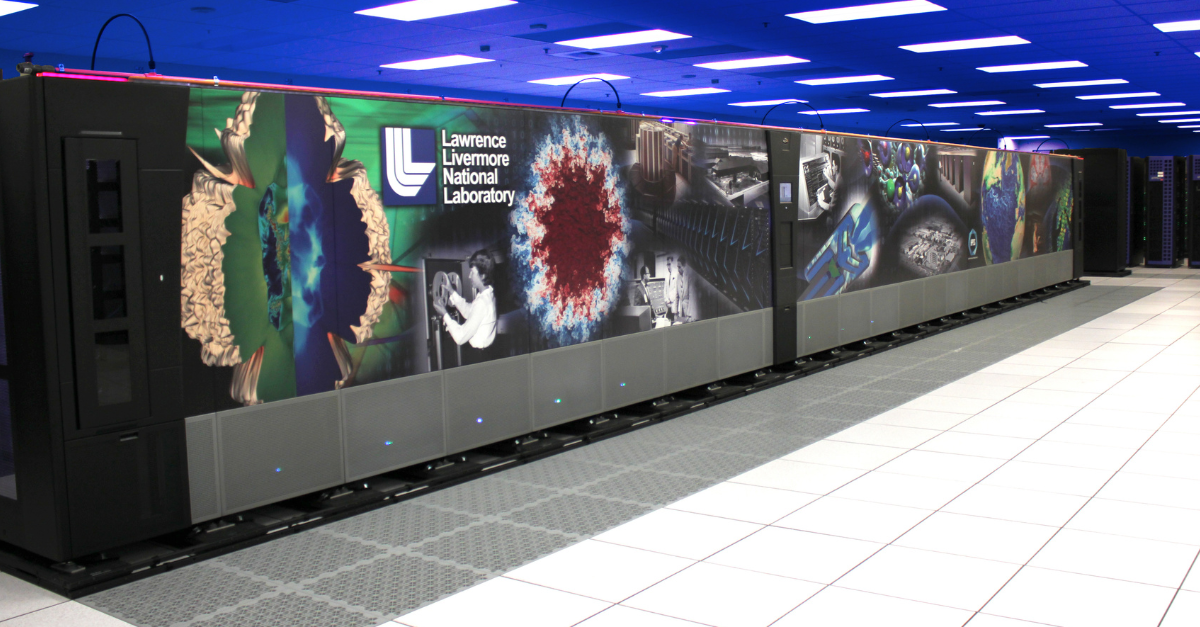
At Lawrence Livermore National Laboratory (LLNL), a premier federal applied science and research institution in California, Spectra TFinity tape libraries are deployed as part of a broader storage ecosystem that houses more than 200 PB of advanced scientific data.
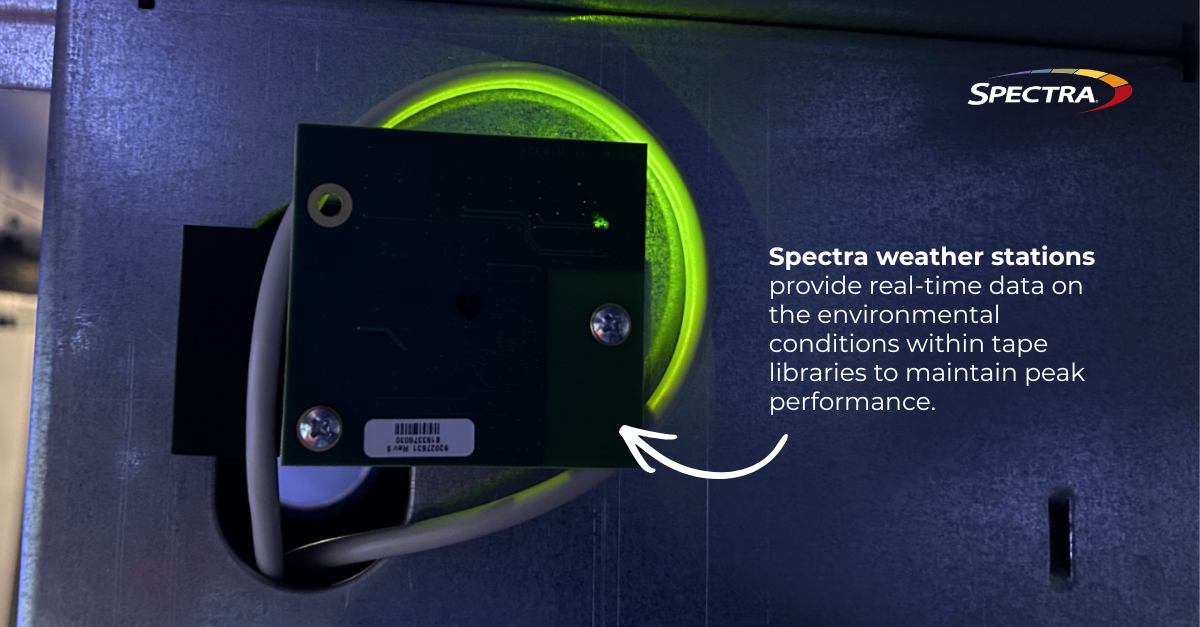
As the organization expanded and managed its archive, the team sought greater visibility into environmental conditions within its tape libraries. To achieve this, LLNL added Spectra weather stations, internal sensors located inside tape library units that continuously monitor temperature and humidity. If these metrics fall outside the recommended range, automatic alerts notify team members so they can take corrective action.
Here, Jose Rodriguez, HPC Storage Operations Specialist at LLNL, shares his experience with Spectra weather stations and tape archives.
Spectra: How has your tape environment evolved over time?
Jose Rodriguez: Our tape archive previously operated on a different vendor’s platform. Because that vendor’s long-term commitment to tape was uncertain, we deployed and migrated our data to the Spectra TFinity libraries. The larger capacity of the IBM TS1150 and LTO-8 media, combined with the standard rack frame of the TFinity, allowed us to grow our capacity while shrinking the tape archive footprint in our data center.
Prior to deploying Spectra weather stations, what challenges did you face with environmental monitoring?
Our data center environment monitoring is in the Facilities air handlers which are all located along the outer walls for the room. For tape that is not ideal, given the complexities of the typical data center. Data center conditions can vary depending on other equipment and load on the environment and by location and day to day.
How do the Spectra weather stations contribute to the reliability and longevity of your tape media and hardware?
With the weather station deployment, we can now monitor the environment directly inside the tape library. Additionally, the weather stations now give us the ability to both monitor remotely and to automate monitoring to send out alerts if the environment is trending in a direction that is not ideal for tape.
How does monitoring and interpreting weather station data support your department's broader goals?
Within our data center, tape has the narrowest operating temperature and humidity bands for optimal operation. As a result, the environment in and around the tape libraries is most closely monitored. This constant and close attention to any fluctuation in the environment allows us to quickly respond and make any adjustments or repairs, which in turn directly benefits compute, disk storage, and networking equipment in the room.
Could you elaborate on the incident where the Spectra TFinity weather stations indicated that the building's environmental controls required maintenance?
Although both temperature and humidity are mostly stable in our environment, from time-to-time humidity increases and threatens going into the “allowable but not recommended” range for tape operations. In these few occurrences, we’ve reached out to our Facilities team who have responded and identified issues within the mechanics of the buildings cooling system. With the issue identified and resolved, humidity steadily moved back into the recommended range.
On a recent, very rare occasion, we experienced the opposite. Humidity had dropped too low, into the top end of the “not allowed” range. Our monitoring software detected this change, as reported by the Spectra weather station, and sent out an alert. The tape archival team quickly suspended all tape operations in the building and reached out to the Facilities team. After a short investigation, the Facilities team identified a mechanical issue at fault and made a repair.
We then monitored the weather station’s readings as the humidity levels in the tape libraries steadily rose back to the allowable range, and we resumed tape operations only after several hours of stability. In reviewing the trending data of the weather stations, we were able to pinpoint when humidity had dipped. We used that trending data in conjunction with our HPSS logs to identify all tapes which had been written to during the quick drop. This allowed us to verify the data on those tapes for any possible write failures, all of which came back fine.
What advice would you offer to organizations considering environmental monitoring for their tape infrastructure?
Because tape performs best within a very well-defined environmental specification, we closely monitor our tape environment for any deviation from that specification.
Our experience has shown that changes can happen at any hour of the day and can be gradual or can quickly degrade. We recommend that organizations with tape infrastructure monitor environmental conditions directly within the library and use automated alerts to allow administrators to respond quickly.