
Phil Wandrei, Product Marketing Manager, Spectra
As tape environments continue to scale, day-to-day management of library infrastructure becomes increasingly important. Organizations need greater visibility into media health, simpler recovery workflows, and more flexible system control to keep long-term data environments running efficiently and reliably.
Spectra LumOS 3.1 library management software* addresses these requirements.
Rather than introducing a single headline feature, LumOS 3.1 delivers a broad set of enhancements designed to improve how tape libraries are operated, maintained, and supported day-to-day. The release strengthens visibility and control across diagnostics, backup and recovery, partition management, usability, and system serviceability.
These enhancements continue the Spectra focus on simplifying the management of large-scale long-term storage environments.
Proactive Media Diagnostics & Operational Visibility
One of the most significant additions in LumOS 3.1 is the new Media Diagnostic capability that allows administrators to proactively validate tape readability, health, and data integrity directly from the Media Lifecycle Management (MLM) interface.
Built specifically for use with Spectra Certified Media, the new Media Test workflow helps organizations identify problematic media before it impacts operations or recoverability. The release includes enhancements across the MLM and Drive Lifecycle Management (DLM) subsystems to improve visibility, data quality, and system awareness.
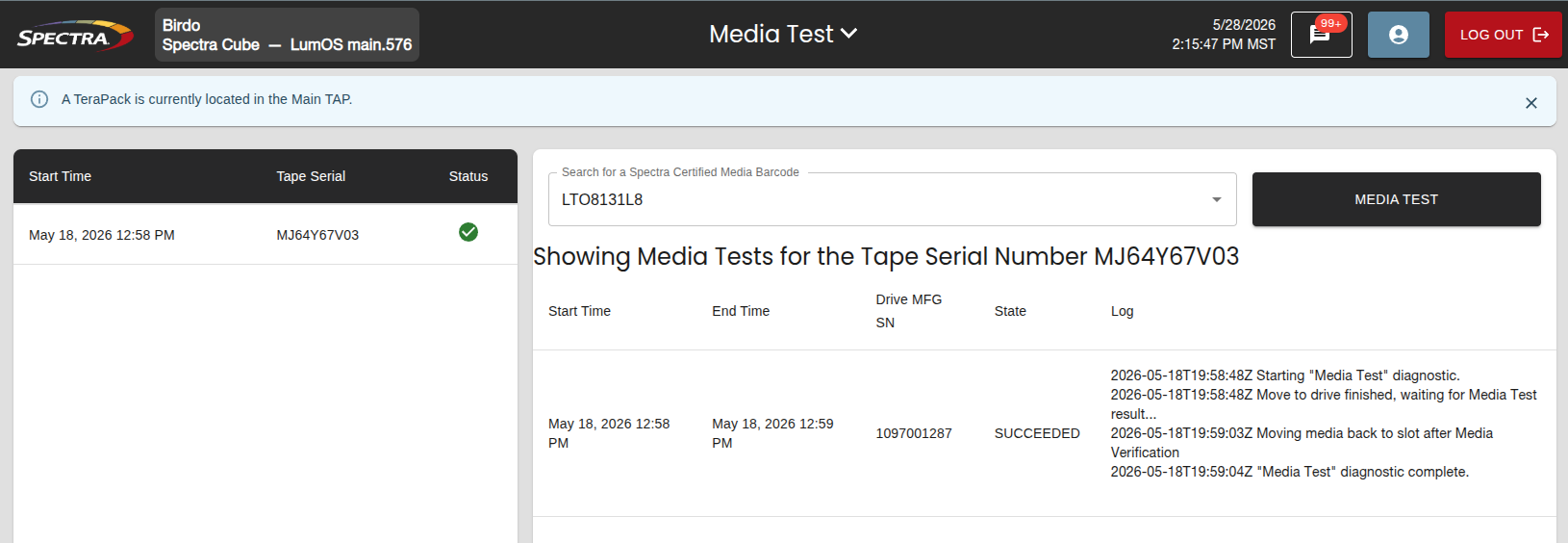
Figure 1 – Media Test Results: Succeeded
Additional improvements include:
- Direct Media Test access from the MLM page
- Enhanced mount and certification data handling
- Improved DLM visibility and graph interactions
- Better filtering and management of Spectra Certified Media and non-certified media
- Expanded visibility for present and exported media views
Together, these updates improve confidence in long-term media reliability while streamlining ongoing media management workflows.
LumOS 3.1 also expands serviceability workflows designed to simplify backup, recovery, and ongoing library support.
Simplified Backup, Recovery & Serviceability
Another major enhancement in LumOS 3.1 is a new USB-based backup and restore capability. Operators can now save and restore library configurations directly from a connected USB drive, with the option to automatically copy backups to USB whenever a new backup is created.
The release also adds the ability to export RIM2 logs directly to a USB drive, simplifying support and diagnostics workflows while reducing dependence on network connectivity. These enhancements are particularly valuable in secure or air-gapped environments where independent recovery workflows and offline serviceability are critical.

Additional safeguards were added to improve reliability and usability, including validation checks for incompatible USB devices, prevention of restores from incorrect library backups, and improved handling of backup failures and restore operations.
Simplified Management & Greater Control
LumOS 3.1 also introduces several enhancements focused on reducing administrative and library management complexity.
Libraries now support mixed Fibre Channel and SAS drives within the same partition, enabling organizations to simplify partition design while supporting gradual infrastructure migration over time. Customers can continue to leverage existing Fibre Channel investments while adopting SAS connectivity in the same library environment.
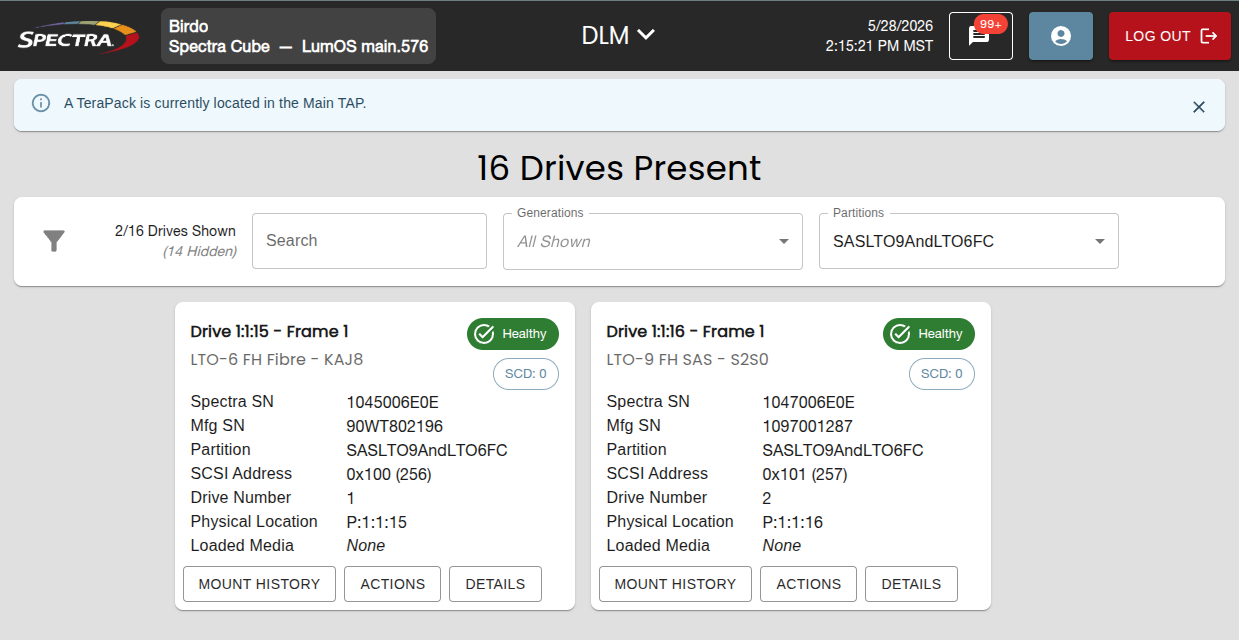
Figure 2 – Tape Library with both SAS and Fibre Channel Tape Drives
The release also simplifies zoning and partition management by removing several historical configuration dependencies and enabling zoning through the LumOS REST API.
Additional operational improvements include:
- Drive unload directly from the DLM screen
- Improved partition editing behavior
- Partition pool resize warnings
- Partition serial number visibility
- Improved alerts and notifications
- Auto-updating MLM UI fields
LumOS 3.1 also expands the new Demo Mode capability, allowing libraries to be safely demonstrated without requiring activity through a SCSI-connected host system. The updated implementation includes integrated API and UI controls with timestamp support, designed for customer demonstrations and data center tours.
Operational Reliability & System Improvements
Beyond new capabilities, LumOS 3.1 includes extensive improvements focused on reliability, availability, and serviceability across LumOS, robotics, motion systems, partition handling, startup behavior, and embedded firmware components.
The release addresses a broad range of system correctness issues, including move handling, inventory consistency, hardware communication, startup resilience, timeout handling, and environmental data processing. Additional improvements strengthen system security controls through login protection, request limiting, and improved user management behavior.
Together, these enhancements help organizations operate tape environments with greater confidence, consistency, and control as infrastructure scales over time to support expanding data volumes.
Long-term storage success is not defined solely by what a system stores, but by how reliably and efficiently it can be operated every day.
If you’re planning a LumOS software upgrade or want to understand how these capabilities apply to your environment, your Spectra team can help you map the right operational approach for your library and workflows.
*Spectra LumOS upgrades are available for Spectra T200, T380, T680, T950, and TFinity tape libraries.